
The Girl With the Dragon Tattoo's Prologue features an unnamed man (who we soon learn is Henrik Vanger) getting a framed, pressed Australian flower in the mail on his birthday, November 1st. He calls Detective Superintendant Morrell and tells him about the flower. Henrik gets one of these flowers every year on his birthday. He has a total of 44 now. But he and the detective can't solve the mystery of who exactly keeps sending them. This thought makes Henrik cry.
After the Prologue, a copy of the Vanger family tree is provided for the readers. The rest of the novel is divided into four parts plus an Epilogue. It moves from December 20, 2002 to December 30, 2003.

Swordfish is actually a fairly clever thriller, but for some reason the cleverness isn't made evident in the direction (by Dominic Sena), which focuses on the action extensively.
Gabriel Shear (John Travolta) wants to steal over nine billion dollars of unused governmental funds stored behind heavily secured computer locks. Gabriel's reason for stealing the money is that he is doing it to take care of American government interests across the world by doing the dirty work that politicians cannot do. A hacker, Stanley Jobson (Hugh Jackman), is recruited by Gabriel to fulfil his goal under an extremely tight deadline.
Gabriel is aided by Ginger Knowles (Halle Barry), who turns out to be a DEA agent and decides to help a reluctant Jobson turn against Gabriel. Or so it seems, since not everything is as it appears in Swordfish.
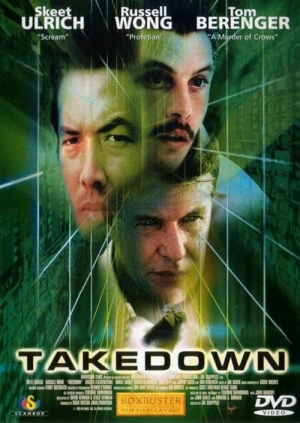
The movie is about two friends, Kevin Mitnick and Alex Lowe, who have been having fun hacking and doing crazy things for years but now they’re getting older and it’s riskier for them to keep doing things that can get them into trouble. Kevin at the start of the film is on probation over some past hacking exploits. They find out about different interesting technological secrets and they do what they can to get access to those secrets. They don’t necessarily break-in using computers, as people are sometimes easier to trick than computers. Many times Kevin gets a contact number for one of the tech support desks or a middle manager that works for a company that has a government contract, he calls them, gives them the name of somebody else that works there, and gets the information from them (social engineering). Sometimes, he makes fake IDs or gets information from garbage they throw out.
They meet other hackers sometimes, which sometimes are federal cops, and they do as much as they can without entrapping themselves, just to fool around and waste the Feds’ time. The movie plays out not just as a hacker movie but also a spy movie. At times it feels like Catch Me If You Can. Kevin since the start of the movie has had the heat from the cops on him with them trying to entrap him. The friend Alex is often making fun at how the media label Kevin as something sort of like a terrorist.

The movie opens with the heist of $35 million in gold bars from a Venetian mansion (hence the title). It is a brilliant opening sequence with little exposition, lots of action and light banter. After the successful job is finished, the crew is double crossed by one of their own—Steve (Edward Norton)—who executes father figure John Bridger (Donald Sutherland) and leaves Charlie Croker (Mark Wahlberg), Lyle (Seth Green), Left Ear (Mos Def) and Handsome Rob (Jason Statham) for dead. A year later, the crew reassembles to recover the gold and exact revenge on Steve, recruiting Bridger's daughter Stella (Charlize Theron) who, like her father, is an expert safecracker.

This tech-world biopic traces the fortunes of personal-computer companies Apple and Microsoft from their obscure dorm-room and backyard origins to their very public battle for corporate supremacy. The parallel lives of Microsoft founder Bill Gates (Anthony_Michael_Hall) and Apple co-founders Steve Jobs(Noah_Wyle) and Steve Wozniak (Joey_Slotnick) -- the former a crafty Harvard dropout, the latter a pair of hippies with jobs at Hewlett-Packard and a yen to sell miniature versions of corporate mainframes to small businesses and at-home enthusiasts. Much like the personal-computer industry itself, the action starts with Apple then gradually shifts to Microsoft. The former plot thread recounts how Jobs and Wozniak "borrowed" key concepts from a Xerox computer lab, eked out their success as countercultural businessmen, and finally fell out with one another over the pressure of success. The latter thread focuses on the way Gates learned from, then surpassed, the brains behind Apple and turned his company into the global powerhouse that it is today.
